Stanford PTSD Research Study
Stanford Psychiatry Center for Interdisciplinary Brain Sciences Research is looking for participants for two studies.
1. PTSD Social support study 2. PTSD Brain biomarker study
Stanford Psychiatry Center for Interdisciplinary Brain Sciences Research is looking for participants for two studies.
1. PTSD Social support study 2. PTSD Brain biomarker study
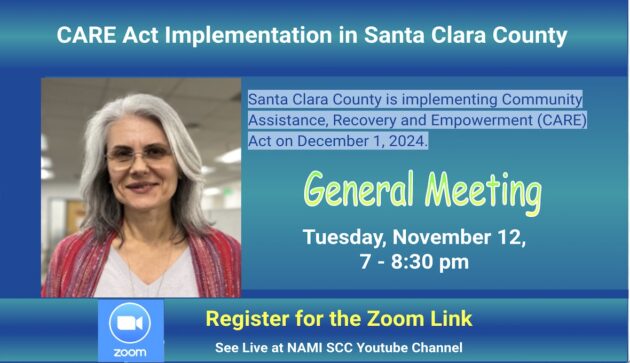
Jeanette Langdell, Helpline Coordinator at NAMI-SCC, is our September 10 General Meeting presenter. Come learn the answers to questions such as: Why is it called a “Helpline”? Who calls us? What kinds of questions do we get? What kind of training does the staff receive?
Dr. Katherine Taylor, Interim Medical Director for Mental Health and Addiction Services at El Camino Hospital, addressed a range of questions that included various treatments and diagnosis, autism spectrum later in life, dual diagnoses, the increase in psychosis due to cannabis use and much more.
Rodriguez lab, Translational Therapeutics of Stanford University, Stanford School of Medicine, is currently looking for participants with Obsessive Compulsive Disorder, ages 18 – 65 years for their research on “Examining Mu Opioid Mechanisms of Ketamine’s Rapid Effects in Obsessive Compulsive Disorder”.
After more than 70 years of antipsychotic medications that are mere iterations of earlier discoveries, a door may have cracked open to offer better options for individuals struggling with severe mental illness. There is much more research to be done, said Dr. Jacob Ballon, who specializes in the treatment of individuals with psychotic disorders including schizophrenia and is Co-Director of the INSPIRE Clinic at Stanford.
Dr. Katherine Taylor is our June 11 “Ask the Doctor” general meeting presenter. Before she delves into your questions, Dr. Taylor will review recent trends in acute psychiatry being seen at El Camino Hospital. She will discuss the importance of awareness and education regarding the potential mental health risks associated with cannabis and methamphetamine use.…
“In Our Own Voice” is a unique public education program developed by NAMI, in which two trained consumer speakers share compelling and personal testimonies of living with and overcoming the challenges posed by mental illness. Audience participation and discussion are encouraged, and a brief video with a variety of stories accompanies the presentation.
The Ending the Silence (ETS) presenter’s purpose is to inform high school students of the symptoms and indicators of mental illness as well as explore ways for people to help themselves, friends or family members who may be in need of support.
Dr. Jacob Ballon is our May 14 general meeting presenter. Dr. Ballon will discuss the current pipeline of medications for schizophrenia, focusing on the medications in clinical trials at the Department of Psychiatry at Stanford University. He will touch on the different mechanisms and how that may make for fewer, or at least different, side effect profiles but also why these medications may work well with existing ones.
Mental illness has never been a one-size-fits-all neurological disorder, and in women’s health the intersection between hormones and mood can further complicate life. But it doesn’t have to be that way said physician Karen Adams, director at Stanford University School of Medicine for Menopause and Healthy Aging. Understanding major depression, schizophrenia, and bipolar disorder during perimenopause and menopause can help women predisposed or diagnosed with a mental illness get through this transitional phase.